The Invisible Door Your Business Desperately Needs
Picture this: it’s peak summer in Bangalore. Your commercial space is fully air-conditioned, your energy bills are climbing every month, and every time a customer walks through your front door, you can practically feel the cold air escaping. Staff constantly remind visitors to close the door quickly. Yet the problem persists.
Now imagine a solution so seamless that it’s essentially invisible, one that keeps your climate controlled, blocks dust and insects, and reduces energy consumption, all without anyone needing to think about it.
That solution is an air curtain. And if you’re a business owner, facility manager, or architect in South India, understanding who the leading air curtain manufacturers in Bangalore are, and what separates a quality product from an average one, could save you lakhs in energy costs annually.
This guide walks you through everything you need to know: how air curtains work, why Bangalore’s commercial sector is adopting them at an accelerating pace, what to look for when choosing a manufacturer, and why Flintron Tech has become a trusted name in this space.
What Is an Air Curtain, and Why Does It Matter More Than Ever?
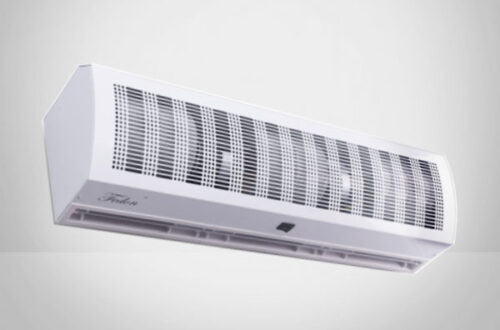
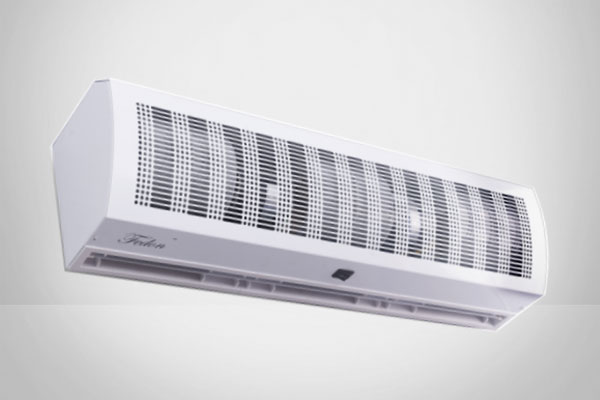
An air curtain is a device installed above a doorway or opening that releases a continuous stream of controlled air, forming an invisible barrier between two environments, typically between an indoor conditioned space and the outdoor ambient environment.
The physics is straightforward: the air stream acts as a seal, preventing the exchange of temperature, airborne contaminants, insects, dust, and odours between two zones without any physical barrier.
The numbers make a compelling case:
- Studies show that air curtains can reduce energy loss through open doorways by 60 to 80 per cent.
- In high-footfall commercial environments (retail stores, hospitals, cold storage), poorly managed entryways can account for up to 25 per cent of total HVAC energy loss.
- Businesses that install properly sized air curtains typically recover their investment within 12 to 24 months through energy savings alone.
In a city like Bangalore, where commercial real estate is booming, power costs are rising, and sustainability is increasingly a board-level conversation, air curtains have shifted from being a luxury to a practical operational necessity.
Why Bangalore’s Commercial Sector Is Driving Demand for Air Curtains
Bangalore is no longer just India’s IT capital. It is a rapidly expanding hub for manufacturing, healthcare, retail, hospitality, and logistics. Each of these sectors generates specific, high-demand use cases for air curtains.
The Commercial Real Estate Boom
Bangalore added over 45 million square feet of commercial office space in the last five years. Every new building, every hotel, every hospital wing, every warehouse — is a potential installation site. Architects and facility managers are increasingly specifying air curtains at the design stage, not as an afterthought.
HVAC Efficiency Under Regulatory Pressure
The Bureau of Energy Efficiency (BEE) in India has been tightening energy performance standards for commercial buildings under the Energy Conservation Building Code (ECBC). Air curtains directly contribute to a building’s energy efficiency rating by reducing the thermal load on HVAC systems, making them relevant not just for comfort, but for compliance.
Post-Pandemic Hygiene Standards
COVID-19 permanently changed how facility managers think about air quality and contamination control. Air curtains, particularly those with HEPA filtration or UV sterilisation options, became part of the conversation around safer indoor environments. That heightened awareness hasn’t faded; it has become embedded in purchasing decisions.
Cold Chain and Food Processing Growth
Karnataka’s food processing sector is expanding rapidly, supported by government initiatives. Cold storage facilities, food production units, and pharmaceutical warehouses require precise temperature management at entry and exit points, exactly where air curtains deliver their most measurable value.
What to Look for When Evaluating Air Curtain Manufacturers in Bangalore
Not all air curtains are built equally, and not all manufacturers offer the same depth of expertise. Here is what experienced procurement managers and facility consultants look for:
1. Product Range and Customisation Capability
Different applications demand different specifications. A retail entrance requires a different air curtain than a pharmaceutical cold room or an industrial loading dock. A credible manufacturer will offer a broad product portfolio covering industrial, commercial, and speciality segments, along with the ability to customise airspeed, width, heating options, and mounting configurations.
2. Energy Efficiency Ratings
Look for products with high Energy Efficiency Ratios (EER) and compliance with BEE standards. Some manufacturers now offer EC (electronically commutated) motor-driven air curtains that consume significantly less power than conventional AC motor designs, a meaningful distinction when you’re running units across multiple doors, 12 hours a day.
3. Installation and After-Sales Support
An air curtain installed at the wrong height, wrong airspeed, or poor alignment delivers a fraction of its potential performance. Manufacturers who provide installation audits, on-site commissioning, and responsive after-sales service are substantially more valuable than those who simply ship a product and move on.
4. Certifications and Compliance
ISO certifications, BEE compliance, and adherence to safety standards are non-negotiable indicators of product quality and manufacturing discipline. They also matter for corporate procurement, government tenders, and green building certification processes.
5. Proven Track Record in Your Sector
Ask for references. A manufacturer with documented experience in healthcare installations understands cleanroom requirements. One with a history in cold chain logistics understands the unique pressure differential challenges at refrigerated doorways. Sector-specific experience is not interchangeable.
Flintron Tech: Setting the Standard Among Air Curtain Manufacturers in Bangalore
Among the manufacturers operating in this space, Flintron Tech has distinguished itself through a combination of engineering rigour, product diversity, and customer-centric service.
Flintron Tech designs and supplies air curtains across a wide range of applications from small commercial retail outlets to large-scale industrial facilities, with products engineered specifically for Indian climatic and operational conditions. Their offerings span unheated, heated, and high-velocity variants, covering everything from standard entryway installations to specialised cold storage and cleanroom environments.
What sets Flintron Tech apart is not just the hardware. It is the approach. Their team conducts site assessments before recommending solutions, ensuring that the product specified is genuinely appropriate for the space, not simply the easiest option to sell. Post-installation support and preventive maintenance programmes are integral to their service model, not optional add-ons.
Practical Installation Tips for Businesses Considering Air Curtains
If you’re moving toward an installation decision, here are actionable steps to ensure you get maximum value:
Conduct a doorway audit first. Measure the exact width and height of each opening. Air curtains must be matched to door dimensions precisely; oversizing wastes energy, undersizing creates gaps in coverage.
Assess your traffic volume. High-footfall entrances need faster air velocities. Slower-traffic openings can use lower-velocity models. Getting this wrong affects both performance and energy efficiency.
Consider the temperature differential. The greater the temperature difference between inside and outside, the more powerful the air curtain needs to be. A warehouse connected to a cold room at -18°C has very different requirements from a retail store at 24°C.
Budget for professional installation. The difference between a correctly commissioned unit and a poorly installed one can be 30 to 40 per cent of effective performance. Treat installation as part of the product cost, not an optional extra.
Maintenance plan. Filters accumulate dust. Motors need periodic servicing. Build a maintenance schedule into your facility management plan from day one.
Industry Outlook: Air Curtains in India Through 2030
The market trajectory for air curtains in India is strongly upward. Several converging forces are driving this:
The green building mandate is strengthening. The Indian Green Building Council (IGBC) and BEE’s ECBC requirements are pushing commercial developers toward energy-efficient solutions at every layer of building design. Air curtains will increasingly appear as specified components in LEED and GRIHA-certified projects.
Smart building integration is expanding. Next-generation air curtains are being designed with IoT connectivity, allowing facility management systems to control units based on occupancy sensors, outdoor temperature data, and door-open duration metrics. By 2030, smart air curtains integrated with building management systems will likely be a standard specification in premium commercial projects.
The cold chain infrastructure gap is closing. India’s cold chain capacity is projected to nearly double by 2030, driven by pharmaceutical export requirements and food safety standards. Every new cold storage facility is a high-value air curtain installation site.
Energy cost pressures will accelerate ROI conversations. As commercial electricity tariffs continue to rise, the financial case for energy-saving investments like air curtains becomes harder to ignore. CFOs who once deprioritised these investments are increasingly receptive when presented with documented payback calculations.
Frequently Asked Questions
Q: Are air curtains effective in all types of commercial spaces? Air curtains are effective across a very wide range of environments, including retail, hospitality, healthcare, food processing, cold storage, and industrial settings. The key is correct product selection and sizing for the specific application. A specialist manufacturer can guide you toward the right configuration for your space.
Q: How long does a quality air curtain last? A well-maintained air curtain from a reputable manufacturer will typically last 10 to 15 years. The longevity depends significantly on the quality of components, frequency of maintenance, and whether the unit was correctly specified for the environment it serves.
Q: Do air curtains actually keep insects out? Yes, when properly installed. The continuous air stream creates sufficient velocity to prevent flying insects from crossing the threshold. This is a primary driver of adoption in food processing, restaurant kitchens, and pharmaceutical environments.
Q: What is the typical return on investment for an air curtain installation? Most commercial installations recover costs within 12 to 24 months purely through HVAC energy savings. In high-differential temperature environments like cold storage, payback periods can be even shorter.
Q: Can air curtains be installed on existing doorways, or only in new construction? Air curtains can absolutely be retrofitted to existing doorways. This is, in fact one of the most common installation scenarios. A site visit from a qualified manufacturer or installer will determine the appropriate mounting configuration for your specific opening.
The era of treating building entryways as an afterthought is ending. For businesses serious about energy efficiency, hygiene standards, and operational professionalism, air curtains are no longer optional equipment; they are a smart infrastructure investment.
Bangalore’s growth as a commercial and industrial hub makes it an increasingly important market for this technology, and the quality of manufacturers operating here has risen to meet that demand. Flintron Tech represents the kind of manufacturer worth evaluating seriously: technically grounded, commercially experienced, and genuinely invested in the performance outcomes of every installation.
If your facility has open doorways losing conditioned air, contaminated entryways affecting hygiene standards, or energy bills that don’t reflect the effort you’ve put into your HVAC system, the conversation with an air curtain specialist is overdue.