Giclée printing allows artists to reproduce paintings, photographs and digital artwork with high levels of detail, colour accuracy and tonal range. For exhibitions, a professionally produced fine art print can preserve important visual characteristics of the original artwork while providing a consistent format for displaying or selling multiple pieces.
Why Giclée Printing Works for Art Exhibitions
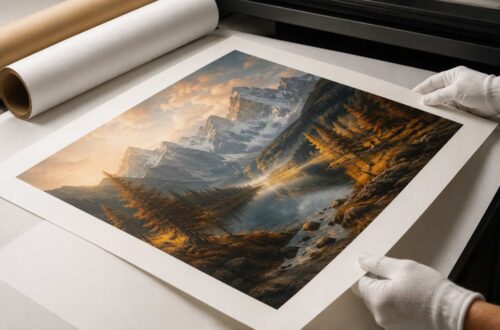
Exhibition artwork needs to look consistent under gallery lighting and at different viewing distances. A professional giclée print can reproduce subtle details that are important to the artist.
Key benefits include:
- High-resolution reproduction
- Detailed colour transitions
- Accurate tonal range
- Fine lines and textures
- Wide colour gamut
- Consistent reproduction across multiple prints
- Choice of archival paper and canvas
For artists creating exhibition editions, these qualities make giclée printing suitable for reproducing original artwork.
1. Start With a High-Resolution Digital File
The quality of the source file has a direct impact on the final print.
Artists can create the digital master through:
- Professional artwork photography
- High-resolution scanning
- Digitisation of original paintings
- High-quality digital artwork files
Make sure the file captures important details such as brushstrokes, texture, gradients and subtle colour variations.
Tip: Avoid repeatedly saving and compressing the master file. Keep an original, high-quality version for future exhibition prints.
2. Use Professional Colour Management
Colour accuracy is essential when reproducing artwork.
A professional workflow can include:
- Calibrated monitors
- ICC colour profiles
- Soft proofing
- Colour-corrected artwork files
- Controlled lighting during artwork photography
- Test prints before final production
Colour management helps reduce differences between the original artwork and the finished fine art print.
3. Choose the Right Fine Art Paper
The paper can change the appearance of the final artwork.
Artists can select from different fine art printing media, including:
- Cotton rag paper
- Smooth archival paper
- Textured fine art paper
- Matte paper
- Other specialist fine art media
Consider the artwork’s texture, colour range, viewing distance and exhibition lighting before selecting the paper.
4. Use Archival Pigment Inks
For exhibition-quality reproductions, artists should consider archival printing materials designed for long-term stability.
A professional archival print may use:
- Pigment-based inks
- Acid-free fine art paper
- Archival canvas
- Suitable protective finishing
The combination of appropriate inks and media helps create a durable print when the artwork is properly displayed and stored.
5. Preserve Fine Details During Printing
Losing detail can happen when an artwork is poorly photographed, excessively enlarged or printed without proper file preparation.
To preserve detail:
- Start with a high-resolution source file.
- Avoid unnecessary image enlargement.
- Sharpen carefully for the final print size.
- Check fine lines at 100% viewing.
- Review shadows and highlights.
- Create a proof before producing the exhibition edition.
A professional giclée print should reproduce the important visual information rather than simply creating a larger version of the digital file.
6. Create a Proof Before the Exhibition
A proof print gives the artist an opportunity to compare the reproduction with the original.
Check:
- Overall colour
- Skin tones, if applicable
- Shadow detail
- Highlight detail
- Fine textures
- Contrast
- Print dimensions
- Paper appearance
If something looks different from the original, adjustments can be made before producing the final exhibition prints.
7. Match the Print Size to the Exhibition Space
Print size should work with both the artwork and the exhibition environment.
Consider:
- Wall dimensions
- Viewing distance
- Artwork proportions
- Frame size
- Lighting
- Surrounding artworks
Large-format fine art prints can create visual impact, but the source file must contain enough detail to support the required enlargement.
8. Maintain Consistency Across Multiple Prints
When several works are displayed together, consistency becomes important.
Maintain the same:
- Colour-management workflow
- Paper or canvas specification
- Print quality
- Finishing method
- Dimensions where appropriate
This helps create a cohesive presentation across the exhibition.
9. Consider Framing and Finishing
The printing process is only one part of exhibition preparation.
Artists should also consider:
- Archival mounting
- Professional framing
- Mat boards
- UV-protective glazing
- Canvas stretching
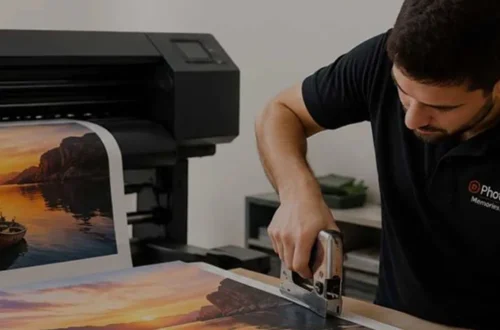
- Print trimming
- Protective packaging
The finishing method should complement the artwork without distracting from it.
10. Work With an Experienced Fine Art Printer
For important exhibitions, working with a professional fine art printing service can help artists manage technical requirements.
Look for a printer that offers:
- High-resolution giclée printing
- Archival pigment inks
- Professional colour management
- Fine art papers and canvas
- Proofing services
- Large-format printing
- Consistent edition production
- Careful artwork handling
Giclée Printing Checklist for Artists
Before sending artwork for exhibition printing, check:
- Source file: Is it high resolution?
- Colour: Has the artwork been colour-managed?
- Detail: Are textures and fine lines preserved?
- Media: Is the paper or canvas suitable?
- Ink: Are archival pigment inks being used?
- Proof: Has a test print been approved?
- Size: Is the file suitable for the final dimensions?
- Finishing: Is the print ready for professional display?
- Packaging: Can the artwork be transported safely?
Final Takeaway
Giclée printing for art exhibitions is about more than producing a copy of an original artwork. High-resolution digitisation, professional colour management, archival inks, suitable fine art media and careful proofing all contribute to preserving detail and visual accuracy. With the right workflow, artists can create exhibition-ready fine art prints that closely represent the character, colour and detail of their original work.